It’s the most distinctive sound in homeownership: a sharp, concussive BANG from the garage, loud enough to hear through the whole house. Most people check for a fallen shelf or a bumped car. What actually happened is quieter-looking and more expensive: a torsion spring just released every bit of its stored energy at once.
Why it’s so loud
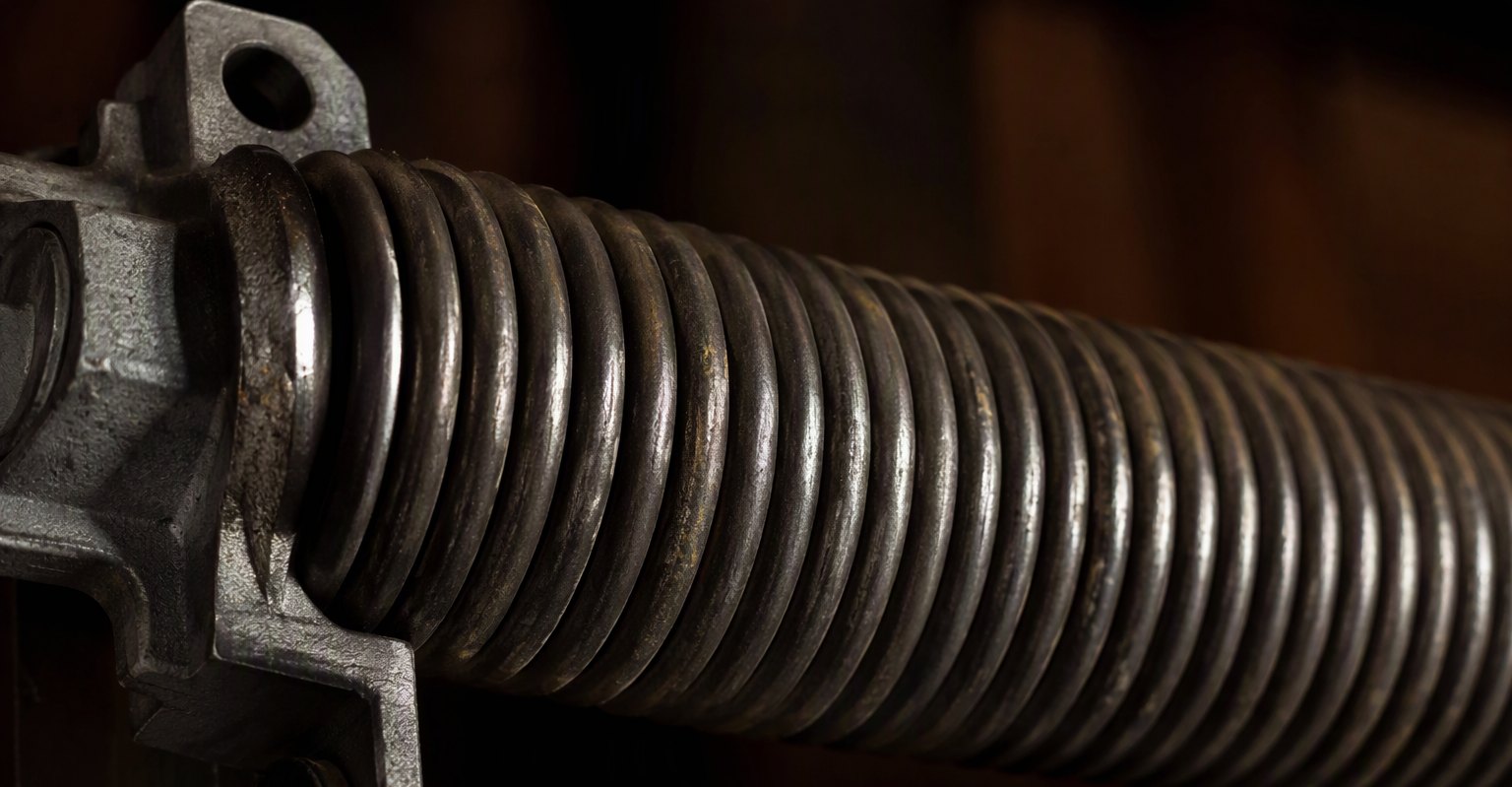
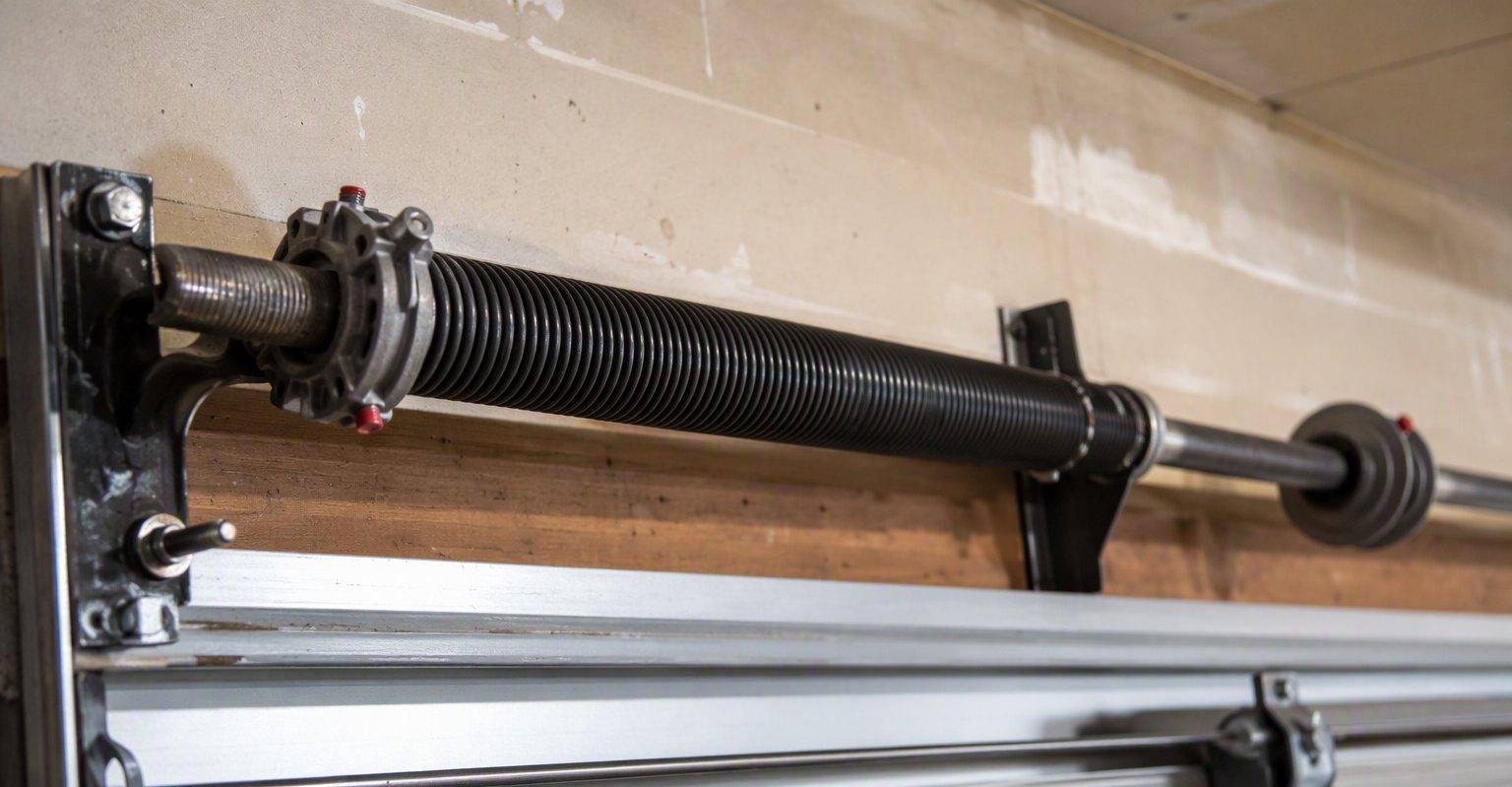
A torsion spring on a standard double door stores enough energy to lift 150–250 pounds, thousands of times, for years. All that energy lives in tightly wound steel. When the metal fatigues past its limit — usually after 10,000 or so open-close cycles — the coil fractures and the energy goes somewhere. That somewhere is the bang. The spring itself just sits there afterward, with a telltale two-inch gap in the coil.
The ten-minute checklist
- Look, don’t touch. From a few feet back, check the spring above the door (torsion) or along the upper tracks (extension). A visible gap in the coil confirms it.
- Don’t run the opener. With a dead spring, the motor lifts the door’s full weight and strips its drive gear — turning a spring job into a spring-plus-opener job.
- If the car is trapped, pull the red emergency release cord and lift manually — evenly, from the center, with help if the door is heavy. One lift to get the car out, then close it and leave it alone.
What the fix looks like
Spring replacement is a same-day, under-an-hour job on most doors: both springs swapped as a pair, sized to the door’s actual weight, then a balance test you watch. We install high-cycle springs rated for 20,000+ cycles as standard — roughly double the builder hardware — because Inland heat shortens every cycle rating. Details on the spring service page.