Ask for an opener recommendation at a hardware store and you’ll get a price ladder. Ask a tech who services them across Riverside County and you’ll get a different answer — because the valley’s heat and housing layouts change which trade-offs actually matter.
Chain drive: tough, inexpensive, loud
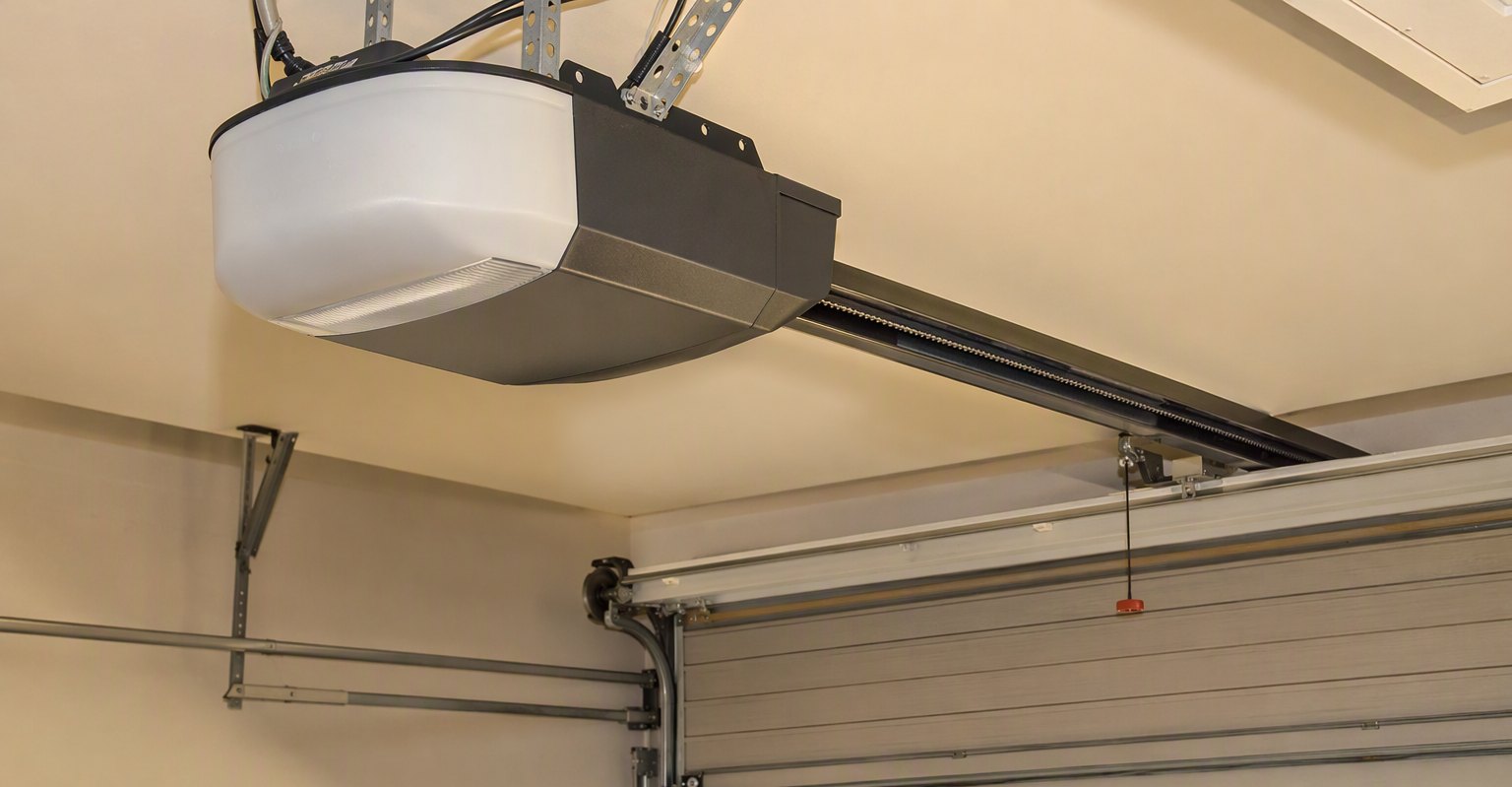
Chain drives are the pickup trucks of openers — simple, strong, and forgiving of abuse. The metal-on-metal drivetrain shrugs off heat and dust. The cost is noise: a chain slapping its rail telegraphs through the framing, and in an attached garage with a bedroom above, every 6 a.m. departure becomes a household event. For detached garages and workshop doors, chain remains a perfectly good answer.
Belt drive: quiet, smooth, our default
A steel-reinforced rubber belt does the same job near-silently. Modern belts handle temperature swings fine — the old “belts crack in heat” story belongs to another generation of materials. For any attached garage, belt drive is our default recommendation; the upcharge over chain is modest and the silence is permanent. Pair it with a DC motor and soft-start, and the door glides instead of lurches.
Wall-mount: the third option nobody mentions
Jackshaft openers mount beside the door on the torsion bar, freeing the entire ceiling — transformative for tall doors, high-lift tracks, and garages where the ceiling is storage or shop space. They cost more and demand a properly balanced door, but in the right garage they’re the strongest machine of the three.
What heat actually kills
Here’s the part the aisle display won’t tell you: in this valley, the drivetrain rarely dies first. The capacitor — the component that gives the motor its starting kick — cooks in garages that run 120°+ all summer, and logic boards follow. Whatever drive type you choose, two features matter here: battery backup (California law on new units, written after wildfire shutoffs) and a brand with real parts availability, so a cooked capacitor is a quick repair instead of a funeral.