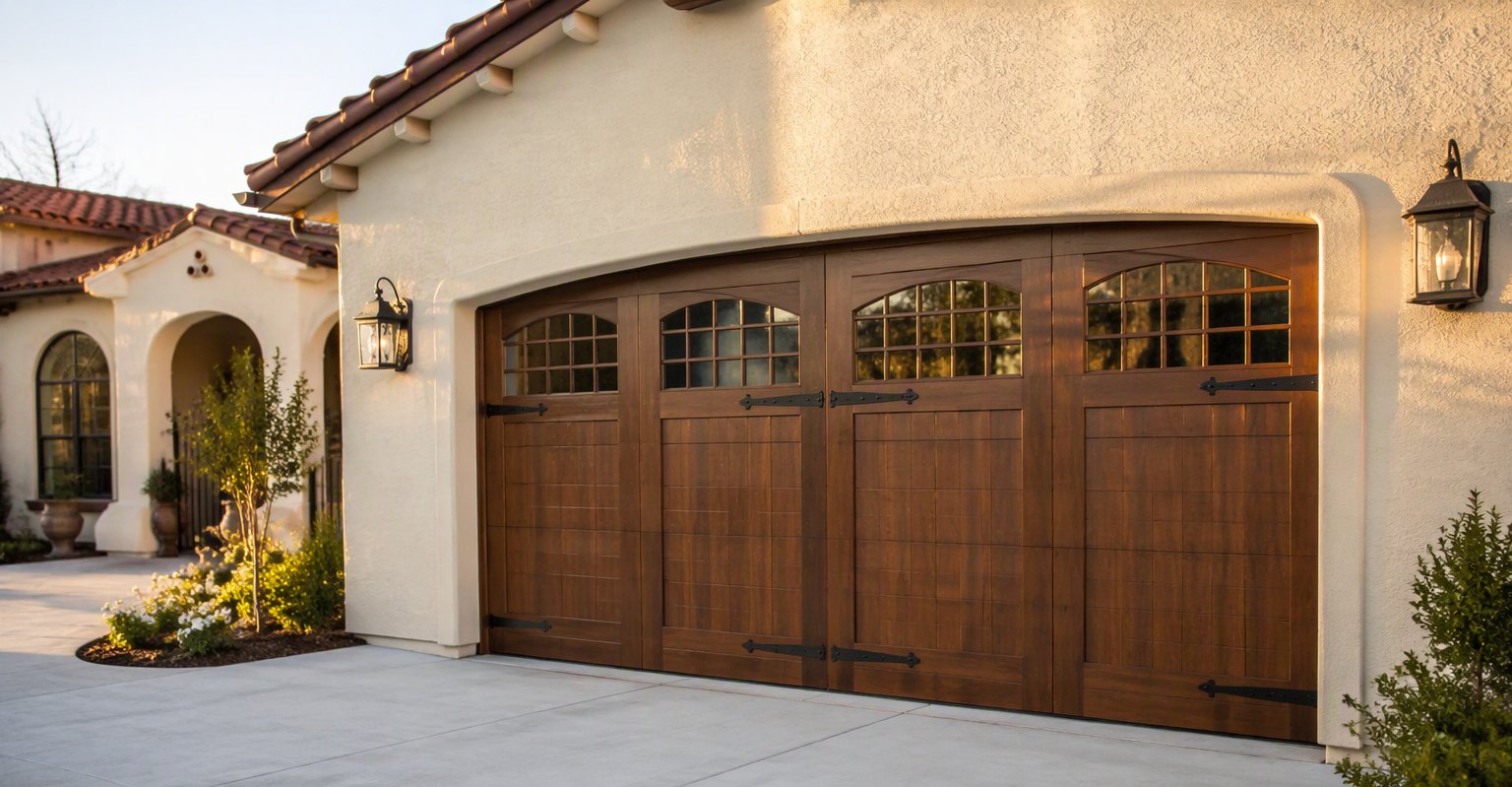
Stand in a Riverside garage at 3 p.m. in August and you’re standing in one of the hottest spaces in American housing. A single-layer steel door facing west turns the garage into a convection oven — measured interior temps past 130°, door surfaces you can’t touch, and heat radiating into the house for hours after sunset.
The temperature math
An insulated door — polyurethane foam sandwiched between steel skins — typically drops peak garage temperature 20 degrees or more compared to single-layer steel. That’s the difference between a garage that’s merely hot and one that damages what’s stored in it: paint, tools, batteries, the second fridge working triple-time, and the opener electronics mounted directly under the ceiling’s hottest air.
The house effect
An attached garage shares a wall — often two — with conditioned space, and in many valley floor plans there’s a bedroom directly above. Every degree the garage holds past sunset is a degree the AC fights through that shared wall. Homeowners who insulate the door routinely report the adjacent rooms running noticeably cooler; the door is the largest uninsulated surface in the entire house, and it shows on the power bill.
The side benefits nobody prices
Insulated doors are quieter — the foam core deadens both street noise and the door’s own rattle. They’re stiffer — the sandwich construction resists denting and wind racking far better than single-skin panels, which matters during Santa Ana season. And they run gentler — a rigid panel tracks true, putting less strain on rollers, hinges, and the opener.
Retrofit vs. replace
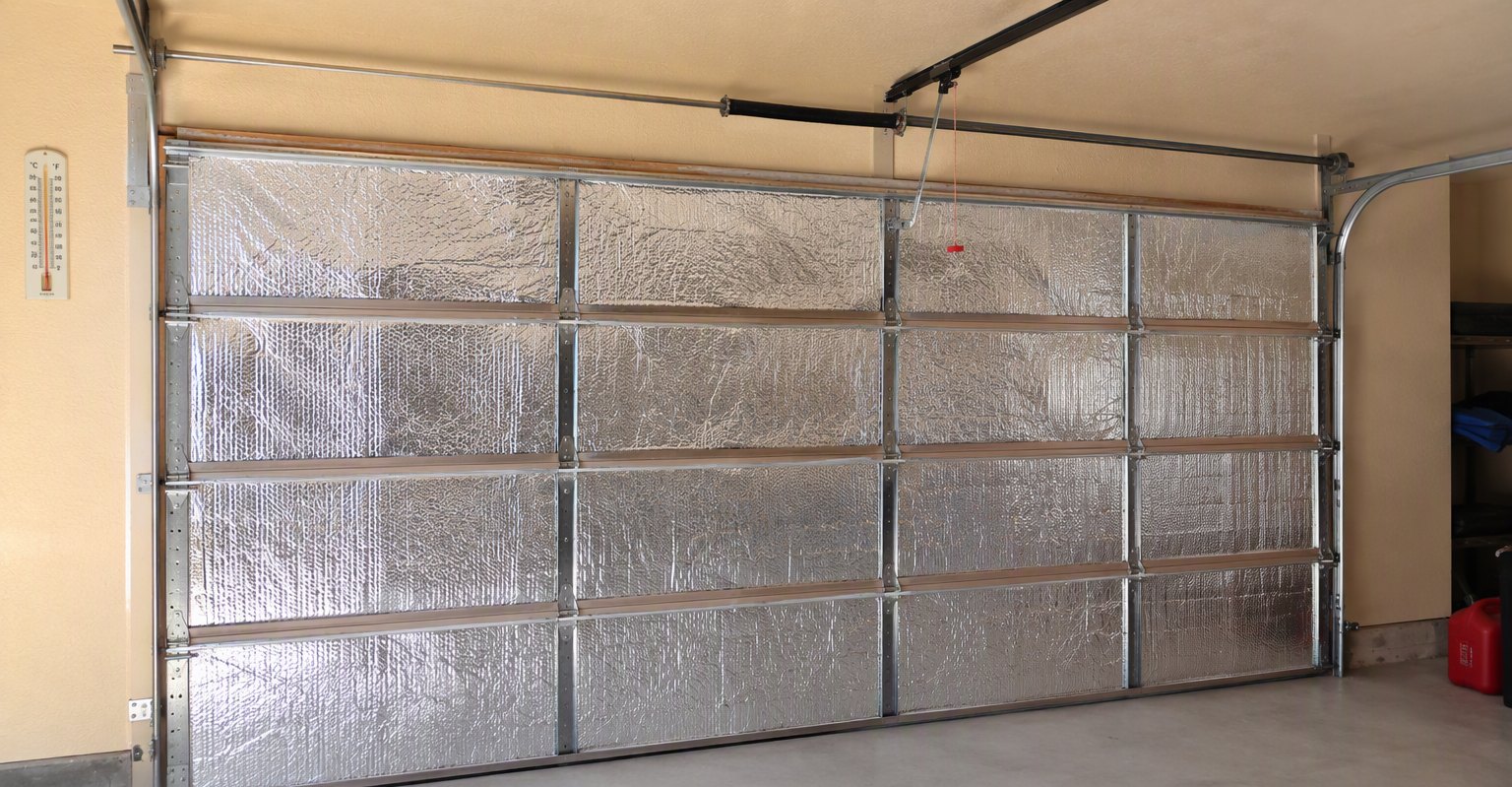
Stick-on insulation kits exist, and they help — but they add weight the springs weren’t sized for, and their R-values run well below a factory-insulated door. If your current door is young and sound, a retrofit plus a spring re-balance is a reasonable stopgap. If the door is due for replacement anyway, insulation is the highest-value upgrade on the sheet — see the installation page for how we spec for this climate.